2026-08-21 · David Kline
What Homeowners in Older Plano Neighborhoods Should Know About Panel Capacity
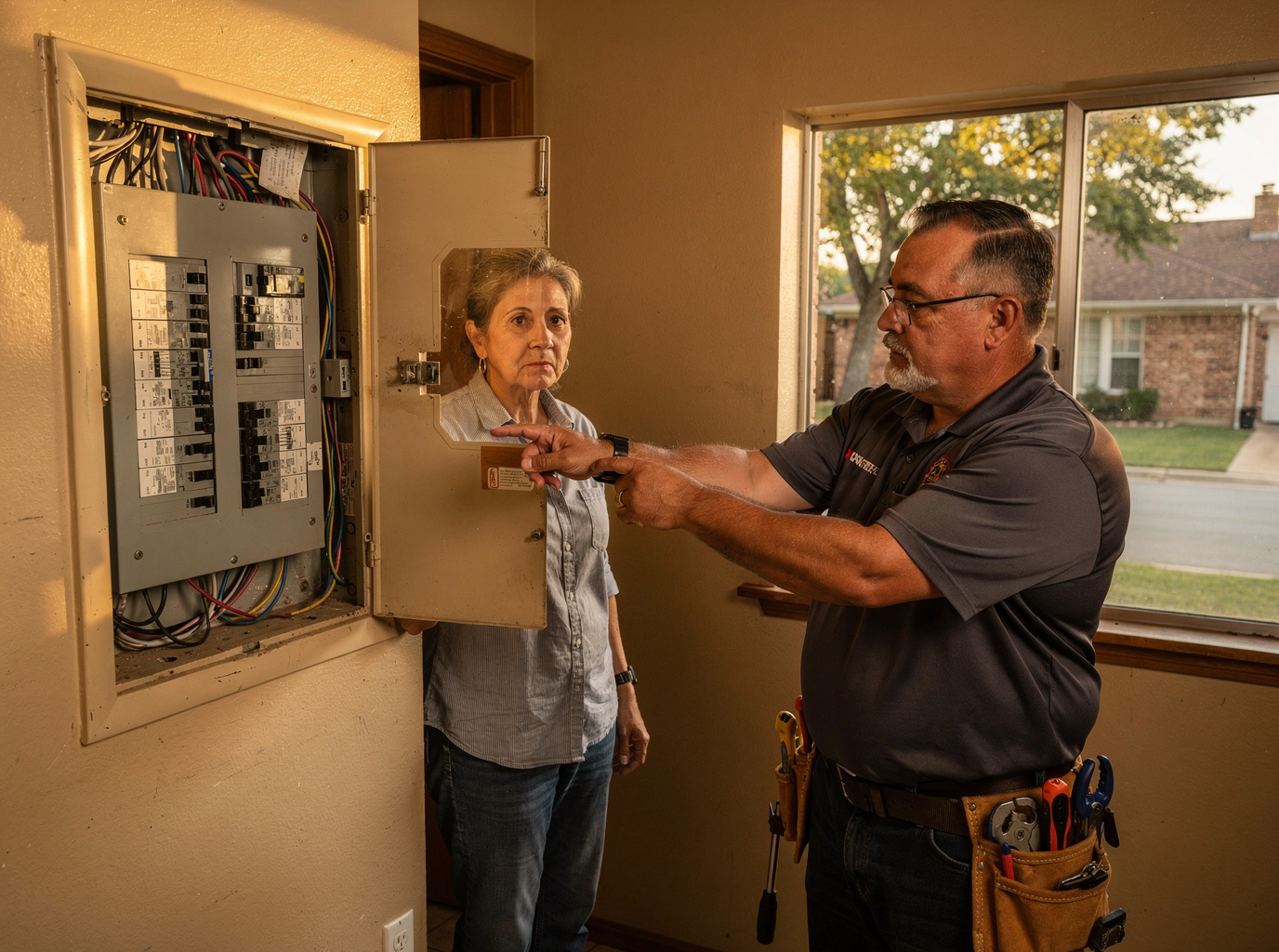
Homeowners in older Plano neighborhoods such as Downtown Plano and East Plano often find their electrical panels rated at 100 amps or less, which may not support today's appliance loads and requires careful assessment before any upgrades.
Panel Ratings Common in Pre-1980s Plano Homes
Many homes in East Plano and Downtown Plano were constructed with 60-amp or 100-amp panels that served basic lighting and small appliances at the time. These panels lack space for additional circuits needed by modern HVAC systems, electric ranges, and multiple electronics. Hot summers push air conditioning units to run longer, increasing the chance of tripped breakers or overheating connections. Collin County soil conditions and occasional flooding near creeks can also contribute to moisture issues around older service entrances. Upgrading to a 200-amp panel provides headroom for current usage without repeated service calls.
Weather and Load Factors Specific to Plano
Plano experiences hot summers that drive continuous AC operation alongside mild winters punctuated by severe thunderstorms. These patterns stress older panels through sustained high amperage draws and sudden surges from lightning or power fluctuations. Homes near Willow Bend and Legacy West that border newer developments sometimes share aging infrastructure originally sized for lighter loads. Severe storms can damage exterior meter bases, making capacity checks essential after events. Linking panel upgrades with whole-house surge protection helps address both daily heat loads and storm-related risks.
Signs of Insufficient Capacity in Local Homes
Flickering lights when appliances start, warm breaker panels, or frequent trips on the main breaker indicate the panel cannot handle combined demands. In older East Plano properties, homeowners may notice these issues more during peak summer afternoons when multiple systems run together. Adding an EV charger or dedicated circuit for a workshop often reveals the shortfall immediately. Checking the panel label for its rating and counting existing circuits gives a quick baseline before consulting a contractor. Addressing these signs early avoids emergency repairs during the hottest months.
Planning an Upgrade for Collin County Properties
An upgrade typically involves replacing the panel, updating the service entrance cable, and possibly coordinating with the utility for a larger meter. In neighborhoods like Downtown Plano, permits through the city and inspections ensure the work meets current codes. Factors such as the home's square footage, existing wiring condition, and future additions like a home office influence the final scope. Homeowners can review the process on the Electrical Panel Upgrade page for typical steps. Coordinating with nearby cities like Richardson or Frisco follows similar timelines but may differ slightly in inspection scheduling.
Connecting Panel Capacity to Broader System Health
Panel limitations often tie into other electrical concerns such as outdated wiring or insufficient grounding that developed over decades. Thunderstorm season brings added risks when older panels lack modern protection features. Homeowners can explore storm preparation details in the article Preparing Electrical Systems for Plano Thunderstorm Season. Similarly, summer heat impacts are covered further in How Plano Summers Affect Home Electrical Systems. These connections help prioritize upgrades that improve reliability across the entire system rather than treating capacity in isolation.